
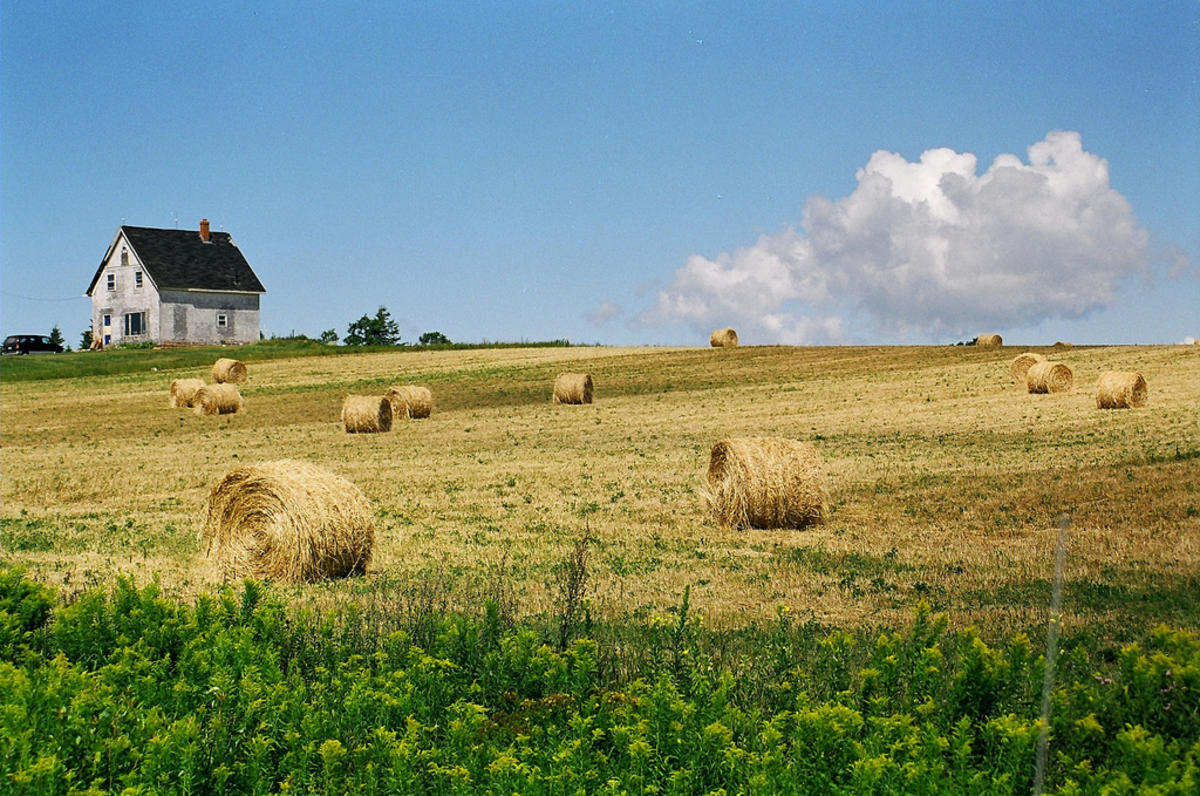

A good PEI history guide should not feel like a list of plaques. Prince Edward Island’s history is easier to understand when you move through it as a journey: from Mi’kmaq presence on Epekwitk, to French and Acadian settlement, to the Charlottetown conversations that helped shape Canada, to the literary landscape that made Anne of Green Gables known around the world.
For first-time visitors, the best way to explore PEI history is to let the Island unfold in layers. Start in Charlottetown, where Confederation history is easiest to see on foot. Cross the harbour to places that reach much farther back than Canada itself. Follow the road to Cavendish, where Lucy Maud Montgomery transformed real Island landscapes into literary memory. Then widen the trip toward Acadian communities, small museums, heritage villages, and local stops that make the day feel lived-in instead of overly scheduled.
This is not a textbook route. It is a way to spend a few days with PEI’s past while still eating well, walking outside, seeing the coast, and stopping somewhere local when the day needs a pause.
“PEI history is not contained in one building. It is in the harbour, the red roads, the Mi’kmaq place names, the Acadian stories, the farmsteads, the literary landscapes, and the small local stops that make the Island feel present tense.”
Start in Charlottetown, Where Confederation Comes Into View
Charlottetown is the natural starting point for a PEI history trip. The city is compact enough to explore on foot, but its significance is larger than its size suggests. This is where the Charlottetown Conference of 1864 helped set the path toward Canadian Confederation.
Province House National Historic Site is the symbolic anchor. Even when visitors cannot experience the building in the usual way because of conservation work, the surrounding area still matters. The streets around Province House, the Confederation Centre of the Arts, Great George Street, Victoria Row, and the waterfront all help visitors understand why Charlottetown has such a strong place in Canada’s origin story.
For history lovers, the best first move is to walk slowly. Start near Province House, then move toward the waterfront. Imagine delegates arriving by ship, formal meetings giving way to social conversations, and a small colonial capital becoming the setting for a much larger political idea. The point is not only what happened inside formal rooms. It is how the city’s scale made conversation possible.
What to Do in Historic Charlottetown
| Stop | Why It Matters |
| Province House area | The symbolic heart of Confederation history in PEI |
| Confederation Centre of the Arts | Useful interpretive stop when Province House access is limited |
| Great George Street | Historic streetscape connecting downtown to the waterfront |
| Charlottetown waterfront | Helps visitors picture the city as a harbour arrival point |
| Victoria Row | Good place to pause between history stops, shops, and restaurants |
After a day of walking, this is where Lone Oak Brewpub can fit naturally. The Brewpub at 15 Milky Way is not a heritage site, and it should not be framed as one. Its value in this guide is different: it gives visitors a local, Island-made stop after a day of Canadian history. For travellers who want dinner and PEI craft beer without defaulting to a chain, the Brewpub is a practical way to keep the day rooted in place.
“After a day spent tracing Confederation history, a locally brewed beer and an unhurried dinner can feel less like a break from the itinerary and more like the modern Island joining the story.”
Cross the Harbour to Skmaqn, Port-la-Joye, and Fort Amherst
A PEI history route should not begin and end with Confederation. Across Charlottetown Harbour, Skmaqn, Port-la-Joye, and Fort Amherst National Historic Site brings visitors into a much longer and more complicated history.
This landscape holds multiple stories at once. Skmaqn, a Mi’kmaq place name often translated as “waiting place,” speaks to the presence of the Mi’kmaq on Epekwitk long before European settlement. Port-la-Joye was one of the earliest permanent French settlements on the Island and served as a colonial centre. Fort Amherst later became part of the British story of occupation and deportation, including the forced removal of thousands of Acadians from Île Saint-Jean.
The site is powerful because it is open, quiet, and scenic. It does not overwhelm visitors with spectacle. Instead, it asks them to stand in a place where waterways, alliances, colonial power, displacement, and memory all meet.
How to Experience the Site
Give yourself time to walk the grounds rather than treating it as a quick photo stop. Read the interpretive panels, look back across the harbour toward Charlottetown, and think about the difference between seeing history from the capital and seeing it from the opposite shore.
This stop works especially well after a morning in Charlottetown because it changes the frame. The story becomes older, wider, and less comfortable, which is exactly why it belongs in a serious PEI history guide.
Make Space for Mi’kmaq History and Living Culture
Any history lover’s guide to PEI should acknowledge that the Island’s history begins long before European maps, settlements, novels, or political conferences. Epekwitk is part of Mi’kma’ki, the traditional territory of the Mi’kmaq, and visitors should make space for Indigenous history as living culture, not simply as background context.
Lennox Island is one of the most meaningful places for visitors who want to learn more. The Lennox Island Mi’kmaq Cultural Centre includes interpretive displays connected to Mi’kmaq history, culture, language, spirituality, and traditions. For travellers, it offers a way to approach PEI history through community knowledge rather than only through colonial institutions.
This part of the journey deserves care. Check hours before going, respect the space as a community setting, and approach the visit as a chance to listen. A good history itinerary is not only about seeing more. It is also about understanding whose stories have been centred, whose have been missed, and how those stories are being shared today.
“The deeper history of PEI begins with Epekwitk. A thoughtful visitor makes room for Mi’kmaq history not as a footnote, but as the ground beneath the rest of the Island’s story.”
Follow Anne of Green Gables Into Cavendish
For many visitors, PEI history is inseparable from Anne of Green Gables. That does not make the story less serious. Literary history has shaped how millions of people imagine Prince Edward Island, and Cavendish remains one of the clearest places to understand that connection.
Green Gables Heritage Place is the centre of the experience. Visitors come for Anne, but they also encounter Lucy Maud Montgomery’s relationship to the landscape: the farmhouse, wooded paths, red roads, fields, and rural surroundings that helped inspire the fictional world of Avonlea.
The best way to approach Cavendish is to treat it as both literary and local. Walk the grounds. Take the trails. Think about why this landscape travelled so far in readers’ imaginations. Then give yourself time in the broader Cavendish area, especially if you are visiting in summer.
What to Do Around Cavendish
| Stop | Why It Works |
| Green Gables Heritage Place | The main literary heritage anchor for Anne visitors |
| Cavendish trails and rural roads | Helps connect the book’s imagined world to real landscape |
| Cavendish Beach | Adds the coastal setting that defines this part of PEI |
| Avonlea Village area | Practical summer stop for food, shopping, and atmosphere |
| Lone Oak Beer Garden | Natural post-history or post-beach stop in Cavendish |
This is where the Lone Oak Beer Garden can appear without feeling forced. It is not part of the Anne story, but it is part of a modern Cavendish day. After Green Gables, trails, shops, or the beach, the Beer Garden gives visitors a casual local stop before they leave the area. The placement works best when it is framed as “what to do after,” not as the reason to visit Cavendish.
Add Acadian History to the Route
PEI’s Acadian history is essential to understanding the Island, especially once visitors have seen Skmaqn, Port-la-Joye, and Fort Amherst. The story of French settlement, Acadian community life, British conquest, deportation, survival, and cultural continuity adds important depth to any heritage-focused trip.
The Acadian Museum in Miscouche is one of the strongest stops for travellers who want a clearer sense of Acadian life on PEI. It works well as part of a western or central PEI route and pairs naturally with other stops around Summerside, Lennox Island, or the Red Sands Shore depending on the day.
Visitors should avoid treating Acadian history as a single tragic event. Deportation is part of the story, but so are community, language, music, religion, food, family, resilience, and continued presence. A good PEI history route should leave room for all of that.
Suggested Acadian-History Day
Start in Charlottetown or Cavendish, drive toward Summerside and Miscouche, visit the Acadian Museum, then continue toward Lennox Island or the Red Sands Shore if timing allows. This makes the day feel like a regional journey rather than an isolated museum stop.
Step Into Everyday Island Life at Heritage Villages and Museums
Not every history stop in PEI needs to be nationally famous. Some of the most useful heritage sites are the ones that help visitors imagine ordinary life: farming, schoolhouses, churches, kitchens, fishing, trades, and rural communities.
Orwell Corner Historic Village is a strong example for visitors who want a more immersive look at rural Island life. Beaconsfield Historic House in Charlottetown gives a different kind of domestic history, showing the architecture and social world of a prosperous late-19th-century home. Eptek Art and Culture Centre in Summerside is another useful stop for regional exhibits, with a focus that can include art, history, science, and craft.
These places matter because they round out the story. Confederation explains politics. Green Gables explains literary imagination. Indigenous and Acadian sites deepen the Island’s longer and more complex history. Heritage villages and local museums show how people lived day to day.
“The smaller heritage stops are often where PEI history becomes easiest to picture: a room, a tool, a kitchen, a road, a schoolhouse, a view across the fields.”
Use Borden-Carleton as More Than an Entry Point
For many visitors, Borden-Carleton is where PEI begins or ends. The Confederation Bridge makes it easy to treat the area as a threshold, but history-minded travellers can use it more intentionally.
The bridge itself is modern infrastructure, but the feeling of arrival matters. It changes the way visitors understand the Island as a place connected to, and separate from, the mainland. Gateway Village and the surrounding area can be a practical first or last stop, especially for road trippers.
This is where Lone Oak’s Borden Taproom fits naturally. A craft beer made on the Island, served near the bridge, is a better expression of place than a generic highway stop. It gives visitors a local pause at the edge of the trip. If the timing works, it can be the first taste of PEI after crossing the bridge or the last one before leaving.
From June 1, the Borden Taproom hours are listed as 11:00 AM to 9:00 PM Sunday to Thursday and 11:00 AM to 10:00 PM Friday and Saturday. For history-focused travellers, it works best as a route-based stop rather than a destination that interrupts the heritage itinerary.
A Two or Three Day PEI History Itinerary
A strong PEI history trip should have enough structure to make sense, but enough breathing room to feel like travel.
Two-Day PEI History Route
| Day | Route | Focus |
| Day 1 | Charlottetown and Rocky Point | Confederation history, downtown walking, Skmaqn, Port-la-Joye, Fort Amherst, local dinner |
| Day 2 | Cavendish and Central PEI | Green Gables, Cavendish landscape, Acadian or rural heritage stop, casual local food and drink |
Three-Day PEI History Route
| Day | Route | Focus |
| Day 1 | Charlottetown | Confederation, waterfront, historic streets, Brewpub dinner |
| Day 2 | Rocky Point, Summerside, Miscouche, Lennox Island | Mi’kmaq, Acadian, and western PEI history |
| Day 3 | Cavendish and Green Gables Shore | Anne of Green Gables, literary landscape, beach or Beer Garden stop |
The three-day version is better for visitors who want the story to feel complete. The two-day version works if you are already planning beaches, food, and coastal drives as part of the same trip.
History Lover’s PEI: At a Glance
| Theme | Best Stops |
| Confederation history | Province House area, Confederation Centre of the Arts, Great George Street, Charlottetown waterfront |
| Indigenous history and culture | Lennox Island Mi’kmaq Cultural Centre, Skmaqn, Port-la-Joye, Fort Amherst |
| Anne of Green Gables | Green Gables Heritage Place, Cavendish, Avonlea-inspired landscapes |
| Acadian history | Skmaqn, Port-la-Joye, Fort Amherst, Acadian Museum in Miscouche |
| Rural Island life | Orwell Corner Historic Village, local museums, heritage houses |
| Local food and drink stops | Lone Oak Brewpub in Charlottetown, Borden Taproom near the bridge, Beer Garden in Cavendish |
Practical Tips for a PEI History Trip
Check hours before you go. Many heritage sites in PEI are seasonal or have changing hours, especially outside peak summer.
Do not make the route too dense. History sites are more meaningful when you have time to walk, read, and absorb the place.
Balance indoor and outdoor stops. A strong PEI history day might include one museum, one landscape, one walk, and one local food or drink stop.
Use local stops to keep the trip grounded. A locally owned restaurant, brewery, café, or taproom can help a history day feel connected to the present Island, not just the past.
Approach Indigenous and Acadian history with respect. These are living cultures, not only historical chapters.
Frequently Asked Questions About PEI History
What are the best historic sites to visit in PEI?
The best historic sites to visit in PEI include the Province House area in Charlottetown, Confederation Centre of the Arts, Skmaqn, Port-la-Joye, Fort Amherst National Historic Site, Green Gables Heritage Place in Cavendish, Lennox Island Mi’kmaq Cultural Centre, the Acadian Museum in Miscouche, Orwell Corner Historic Village, and Beaconsfield Historic House.
Why is PEI important to Canadian Confederation?
PEI is important to Canadian Confederation because Charlottetown hosted the Charlottetown Conference of 1864, where political leaders discussed ideas that helped lead to Canadian Confederation in 1867. Province House is the main symbolic site connected to that history.
Where can visitors learn about Indigenous history in PEI?
Visitors can learn about Indigenous history in PEI at places such as Lennox Island Mi’kmaq Cultural Centre and Skmaqn, Port-la-Joye, Fort Amherst National Historic Site. These stops help visitors understand Epekwitk as part of Mi’kma’ki and recognize Mi’kmaq presence as foundational to PEI history.
What Anne of Green Gables sites should visitors see in PEI?
The main Anne of Green Gables site to visit in PEI is Green Gables Heritage Place in Cavendish. Visitors can see the house, walk the trails, and explore the landscape that inspired Lucy Maud Montgomery’s fictional Avonlea.
Where can visitors learn about Acadian history in PEI?
Visitors can learn about Acadian history in PEI at Skmaqn, Port-la-Joye, Fort Amherst National Historic Site and at the Acadian Museum in Miscouche. These sites help explain French settlement, Acadian community life, deportation, and cultural continuity on the Island.
What is the best PEI history route for first-time visitors?
A good PEI history route for first-time visitors starts in Charlottetown with Confederation history, crosses to Skmaqn, Port-la-Joye, Fort Amherst for Mi’kmaq, French, British, and Acadian history, then continues to Cavendish for Green Gables Heritage Place. If time allows, add Lennox Island and the Acadian Museum in Miscouche.
Where does Lone Oak fit into a PEI history trip?
Lone Oak fits into a PEI history trip as an authentic local stop rather than a heritage attraction. The Brewpub works after a Charlottetown history day, the Borden Taproom works for travellers arriving or leaving by the Confederation Bridge, and the Cavendish Beer Garden fits after Green Gables or a Cavendish day.